Miami Shoe Museum
© 2026 Gustavo Osorio. Created for an ongoing museum exhibition exploring the reinterpretation of vintage shoe advertising across 50 to 100 years. All rights reserved.
The 2026 creative reinterpretations were created using AI.
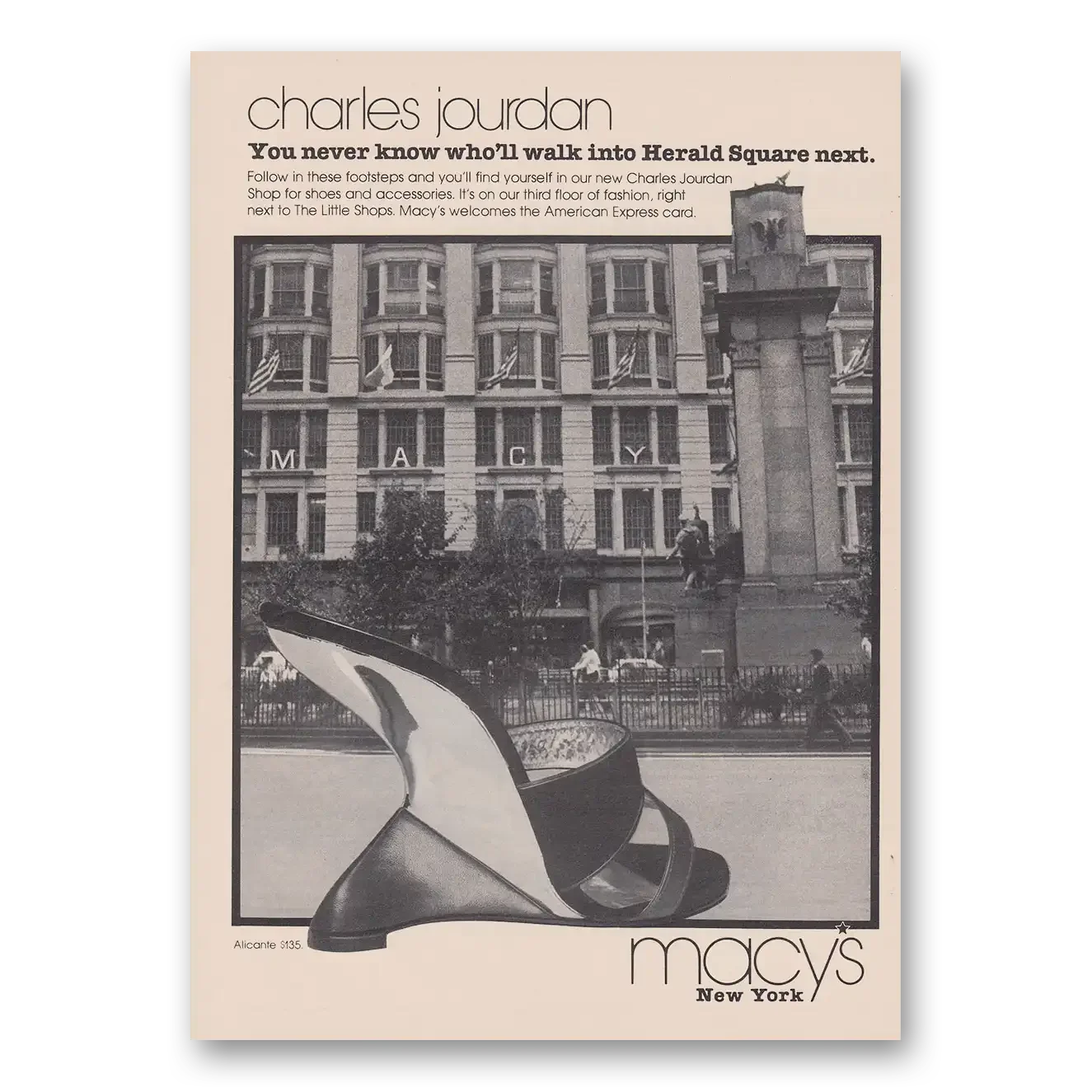
CHARLES JOURDAN
Charles Jourdan’s 1979 cantilever shoe captured the era’s spirit of innovation through balance, illusion, and sculptural design. It stands as a bold example of avant-garde French luxury.
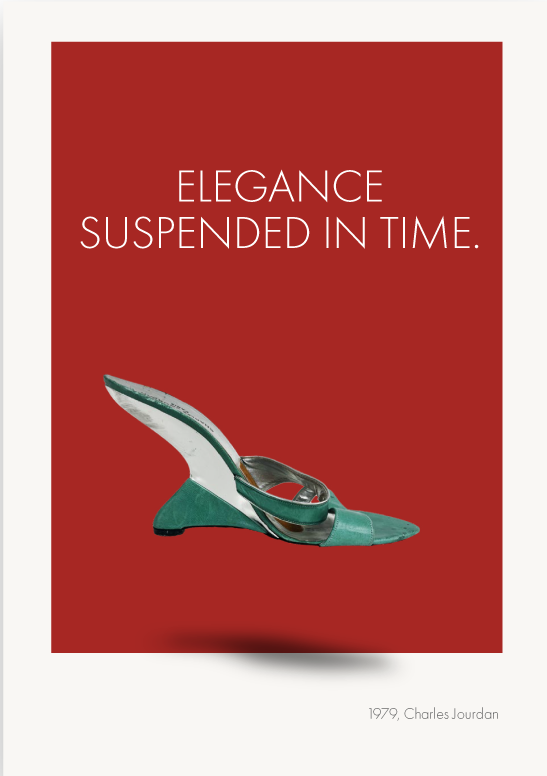
Inspired by Guy Bourdin with his minimalist style and flat colors beige and red
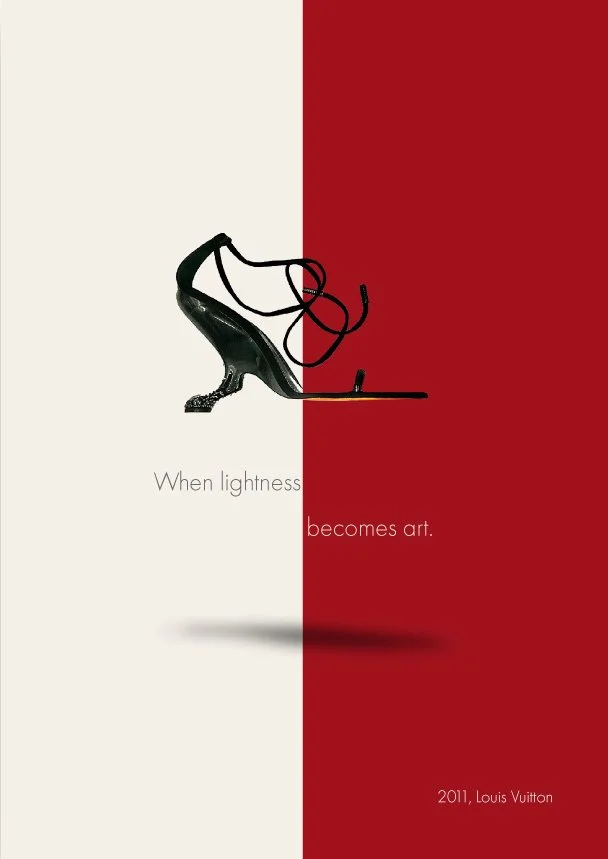
2011 - Louis Vuitton Concept:
WHEN LIGHTNESS BECOMES ART.
Reinterpretation of the cantilever heel 2026
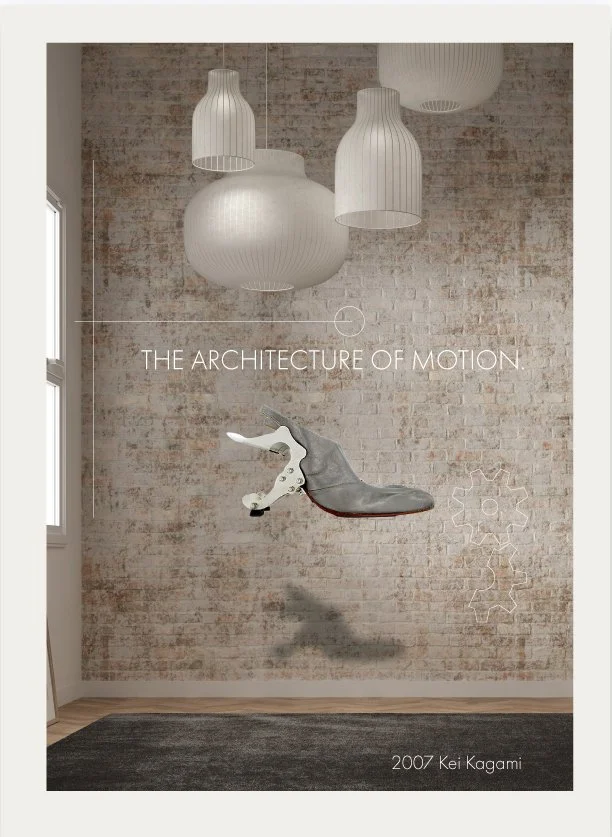
Kei Kagami Concept:
THE ARCHITECTURE OF MOTION. Fashion
Meets Structure in the 2007 Cantilever Shoe
This Perugia / I. Miller AD from 1926
footwear is elevated beyond product into symbol. Through Art Deco influence, geometric abstraction, and a theatrical composition, the shoe becomes an icon of modern elegance and cultural sophistication.
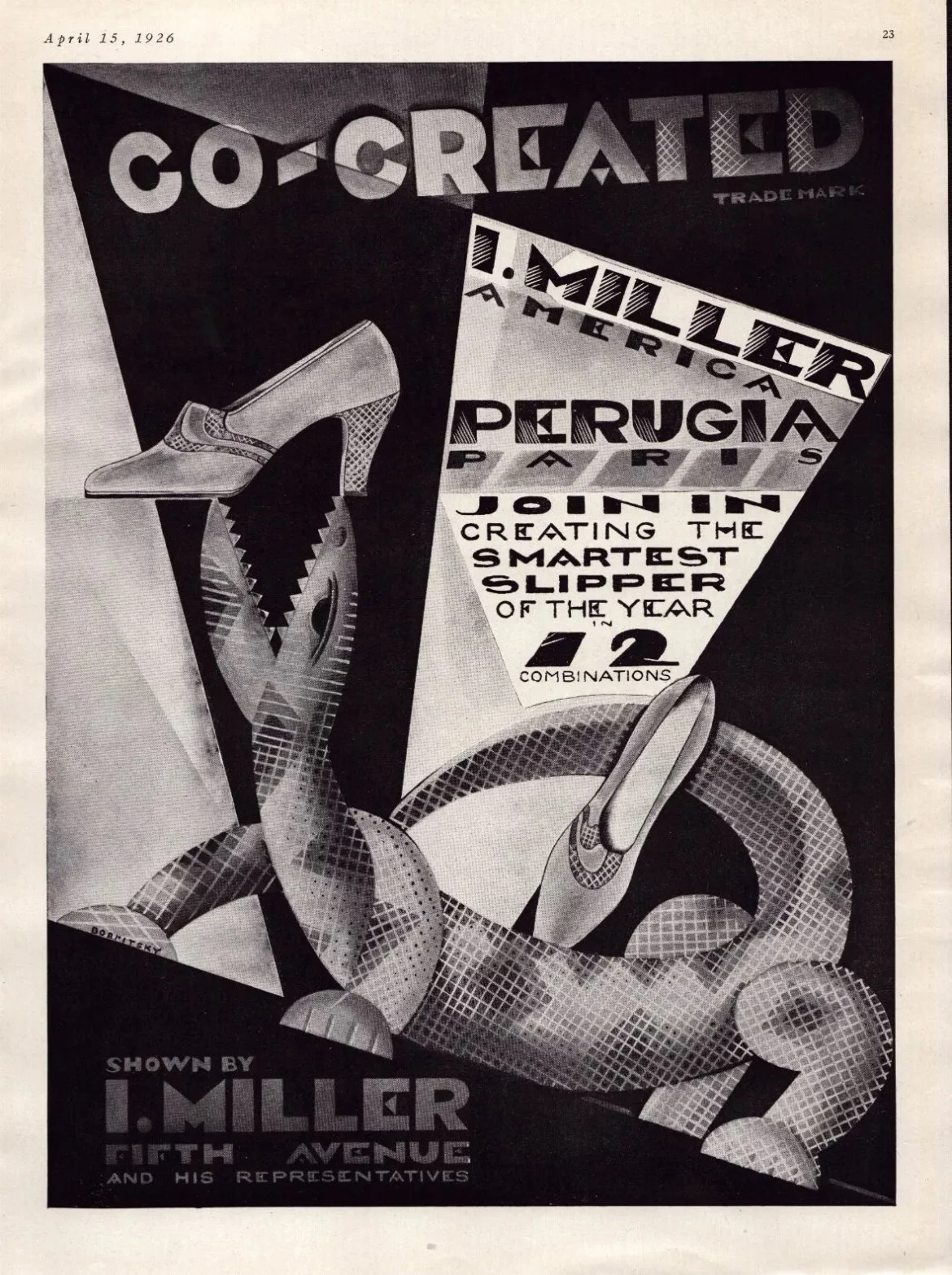
PERUGIA I. Miller, 1926
Inspired by early twentieth-century footwear advertising, this piece repositions the shoe as a cultural object shaped by elegance, discipline, and modern life.
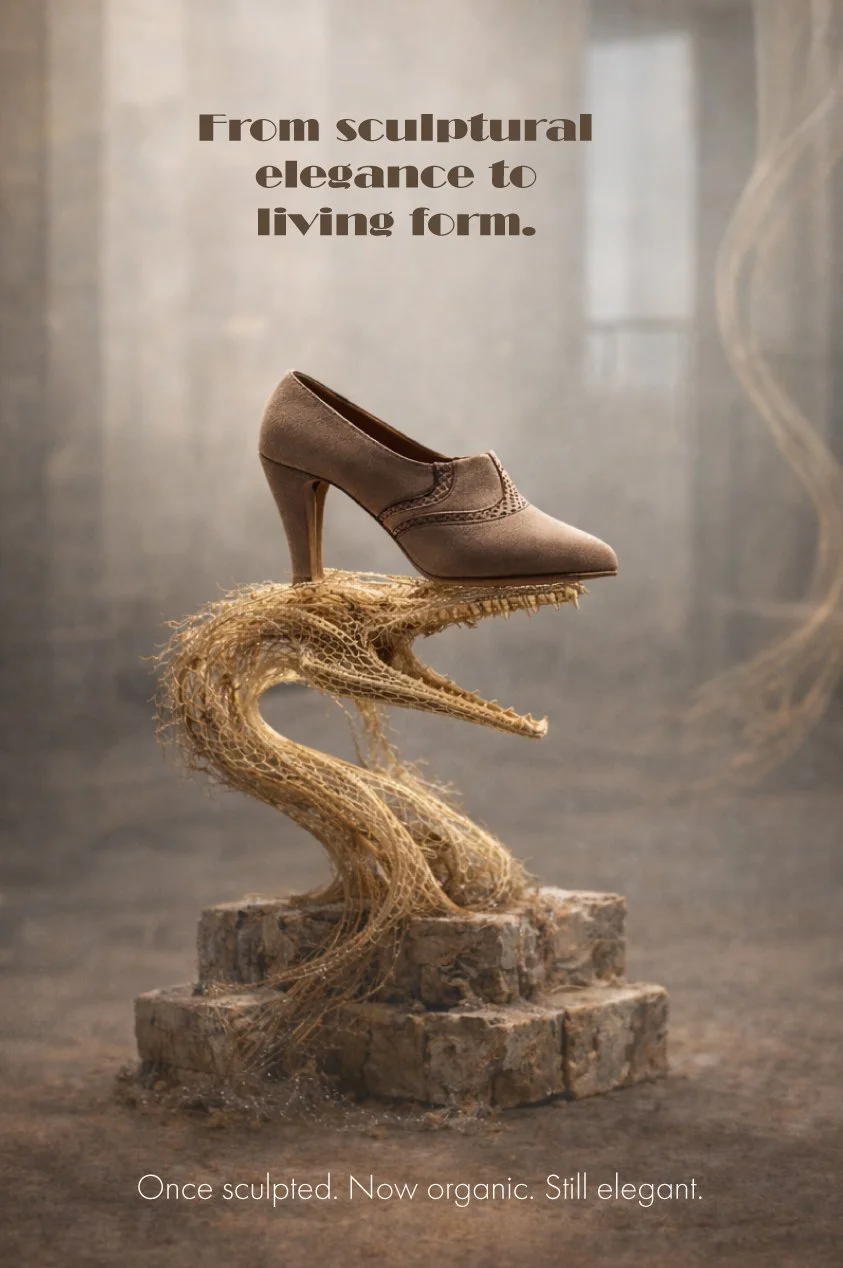
PERUGIA I. Miller, 2026
The 1926 ad framed the shoe as a symbol of elegance and modernity. The 2026 reinterpretation preserves that idea through materiality, tactility, and organic transformation. What remains is elegance.
The Turban A delicate new fashion twist 1948–1955
This I. Miller advertisement presents footwear as a sculptural expression of elegance. Its elongated silhouette and wrapped front detail emphasize form, movement, and refinement, turning the shoe into both a design object and a symbol of mid-century luxury.
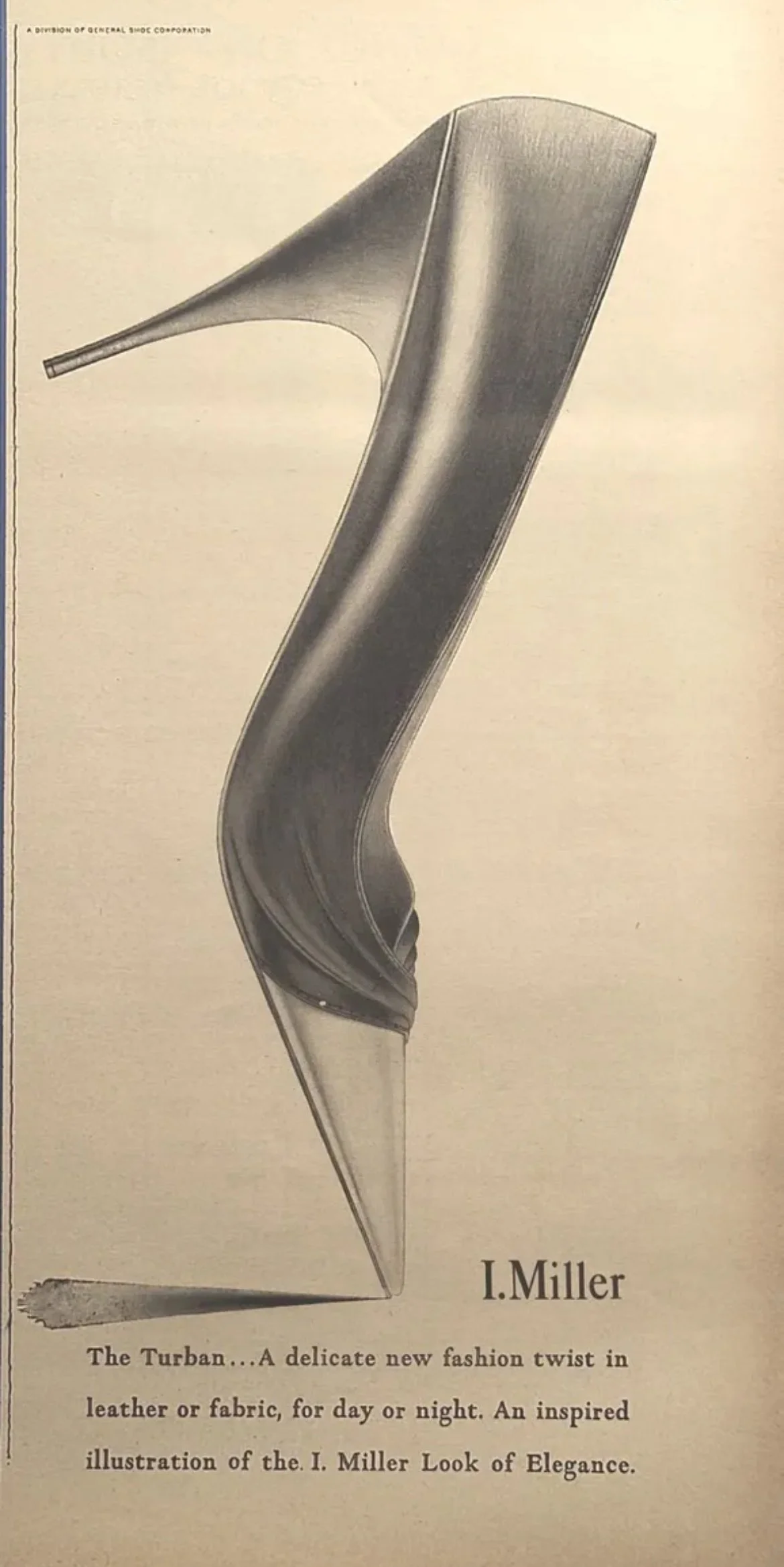
The Turban 1948–1955
From the late 1940s to mid-1950s, I. Miller presents footwear as sculpture, transforming the shoe into an expression of elegance beyond function. Its elongated silhouette and wrapped front detail create purity, movement, and sophistication, while the stripped-back composition elevates the form into a symbol of luxury and modern design.
The Turban (2026)
The visual language shifts from function to expression. The shoe is no longer presented as an object of use, but as a sculptural presence-where elegance emerges through proportion, balance, and controlled movement. Form becomes the primary message. Structure replaces ornament. Elegance is revealed through clarity and restraint.
I.Miller-Sugar Plum 1942–1943
This I. Miller advertisement (1942–1943) reflects a moment when footwear was defined by function, reliability, and readiness. Through restrained composition, the shoe becomes a symbol of discipline, purpose, and everyday performance.
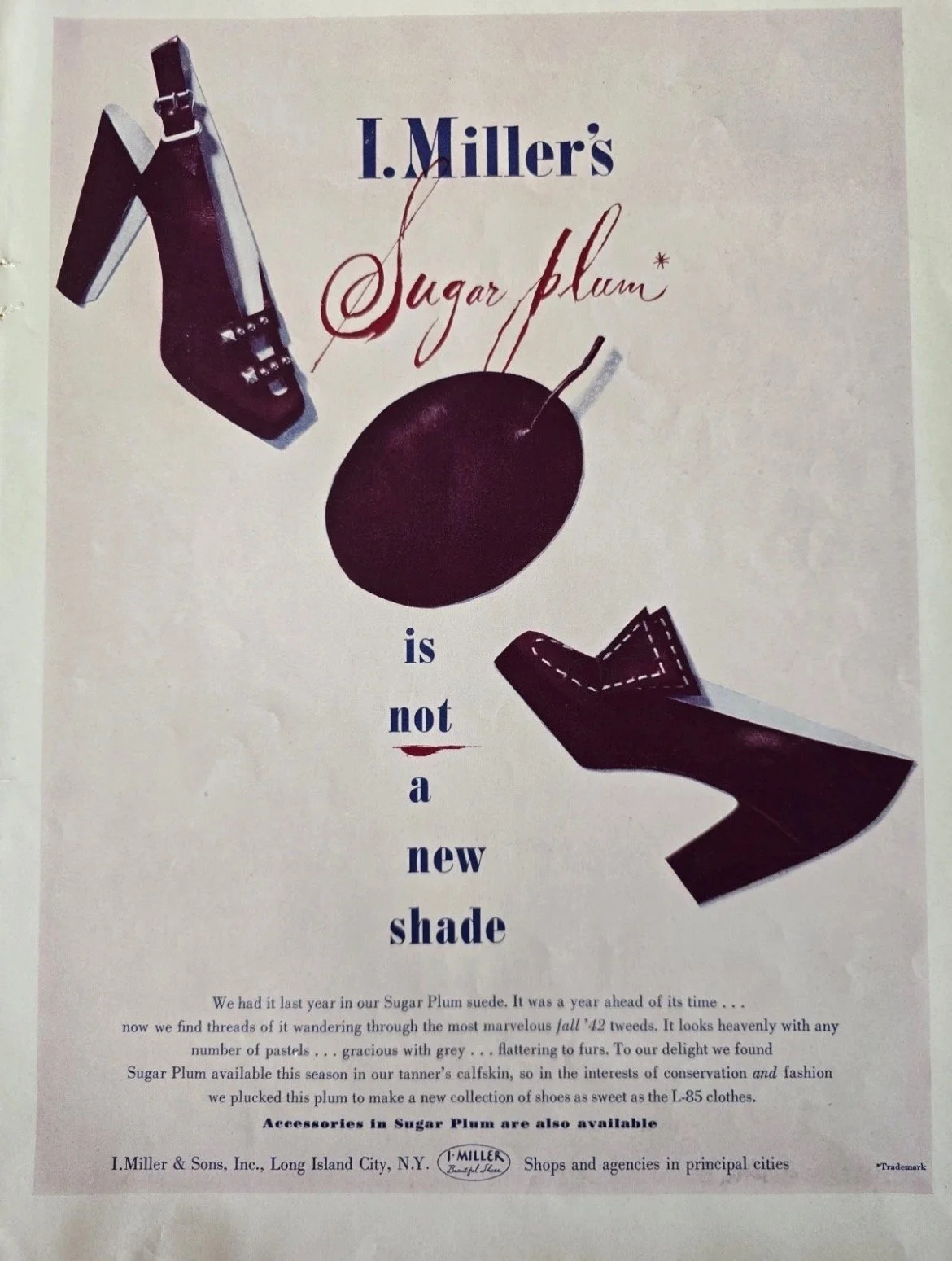
I.Miller-Sugar Plum 1942–1943
Inspired by mid-century I. Miller advertising, this concept redefines color as identity. Sugar Plum becomes a distinctive visual signature, expressed through the form of the shoe.
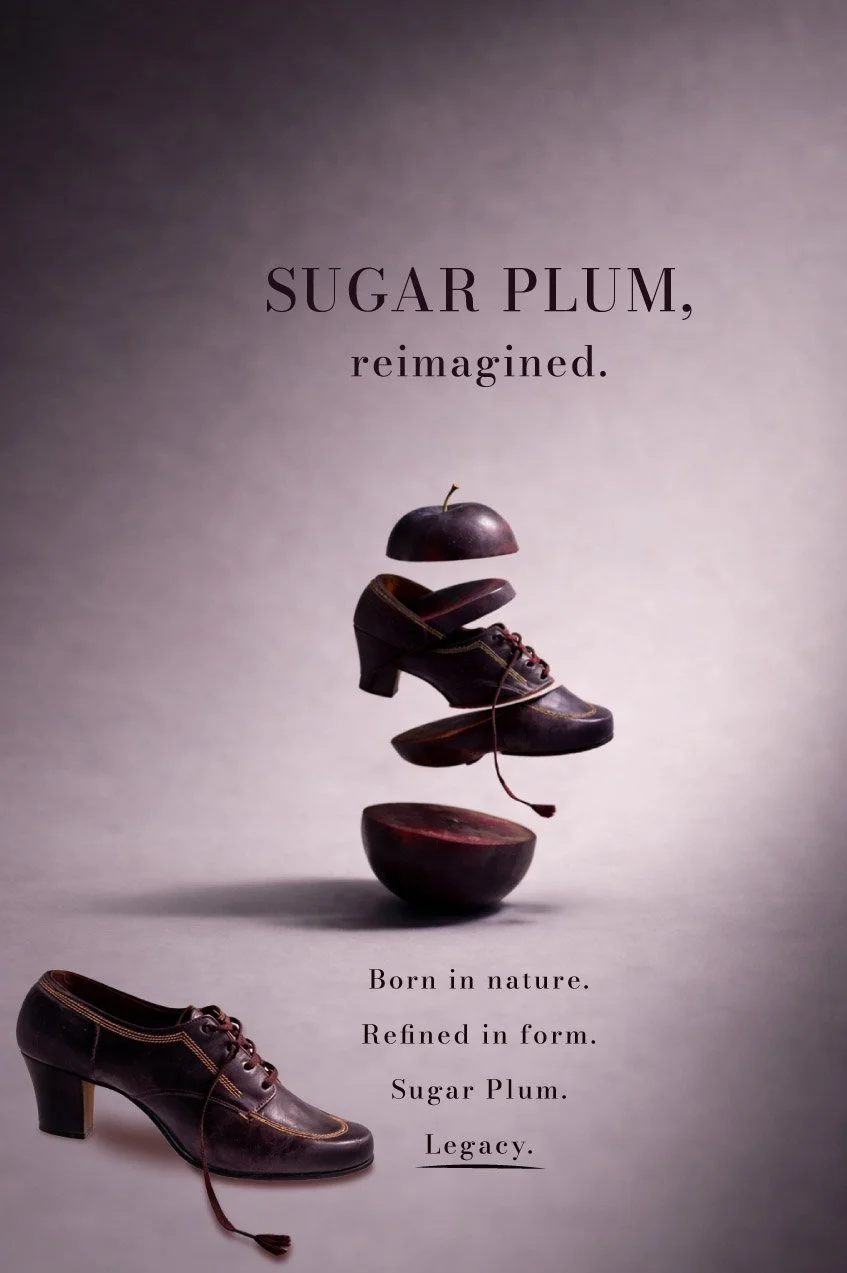
I.Miller-SugarPlum 2026
Transformation defines craftsmanship. The shoe is presented not as a finished object, but as a form in evolution—where organic origin meets refined design. The composition reveals craftsmanship as a process of transformation.
Herbert Levine (1955) Under Construction
The shoe is no longer an object... it is intention. Beneath the surface, an invisible architecture shapes the line of the body with quiet precision. Every curve, every angle, carefully constructed to elongate, refine, and transform. Nothing is excessive. Nothing is accidental. It doesn’t decorate...
it defines. Because true seduction isn’t what is revealed, but what is perfectly constructed.
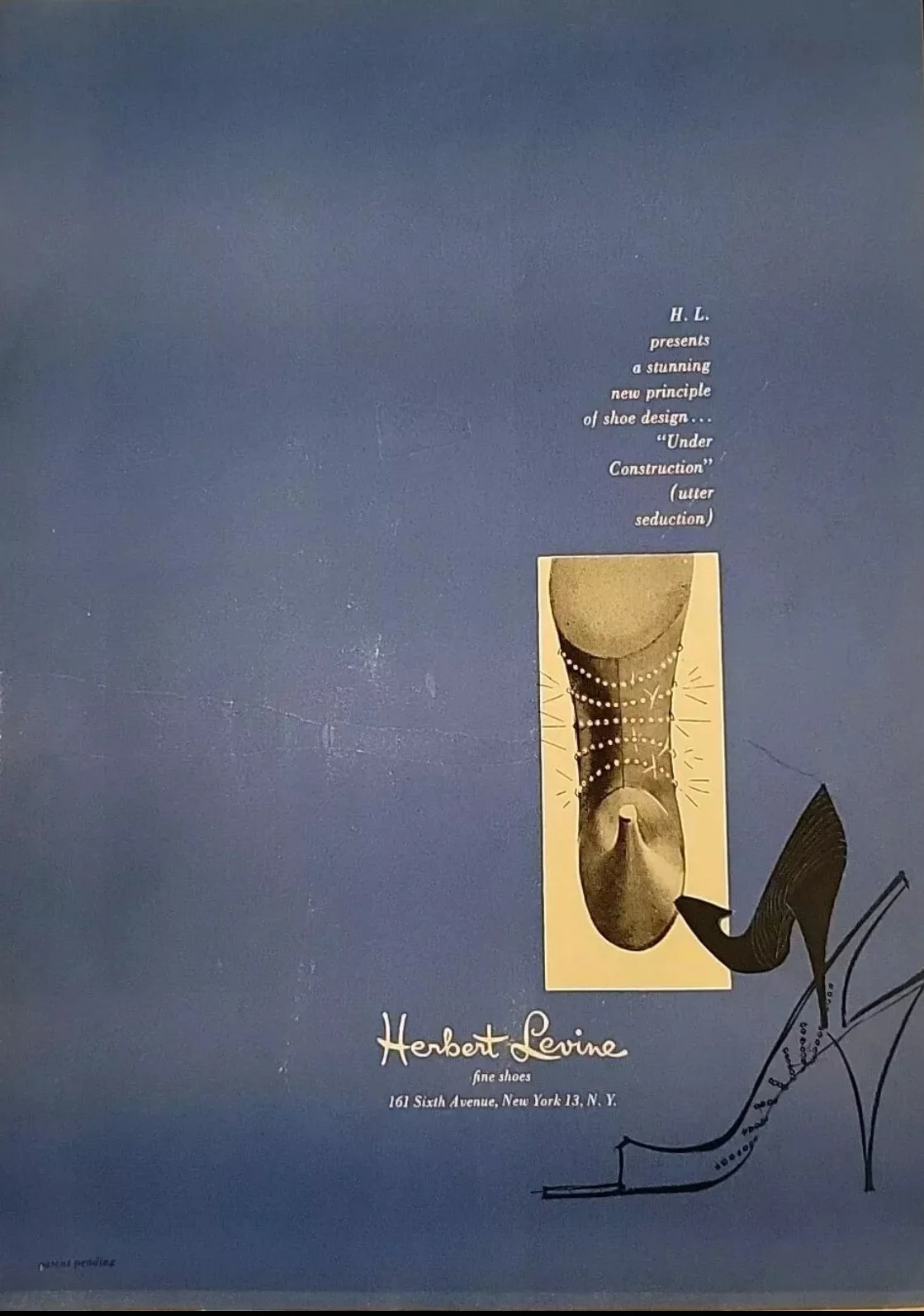
Herbert Levine (1955) Under Construction
In 1955, Herbert Levine introduced a new principle in shoe design: construction as seduction. Rather than relying on ornament, the ad presents elegance as something engineered refined through line, structure, and restraint.
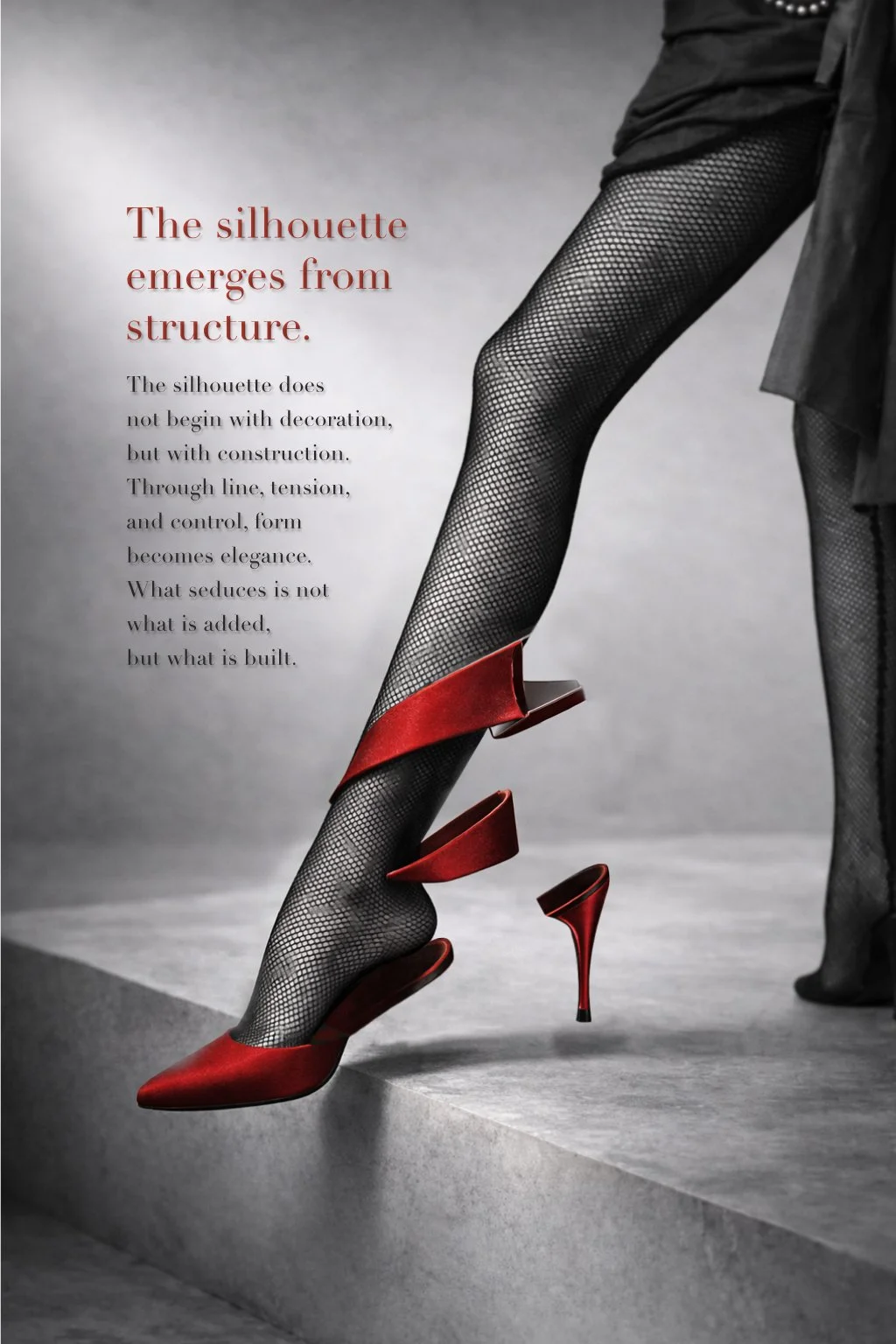
Herbert Levine (2026)Under Construction
Inspired by Herbert Levine’s 1955 “Under Construction” ad, this piece reimagines elegance through structure, where the silhouette emerges from line, tension, and precision rather than ornament.
Schiaparelli Surrealism as Structure
Fashion became symbol. Ornament became language. The look transforms the body into a site of tension, power, and spectacle. A severe black silhouette is interrupted by sculptural gold elements that behave like jewelry, armor, and surreal anatomy at once. Elegance here is not soft or decorative. It is controlled, theatrical, and confrontational. The result is a vision of couture where fashion moves beyond dress and becomes object, symbol, and presence.
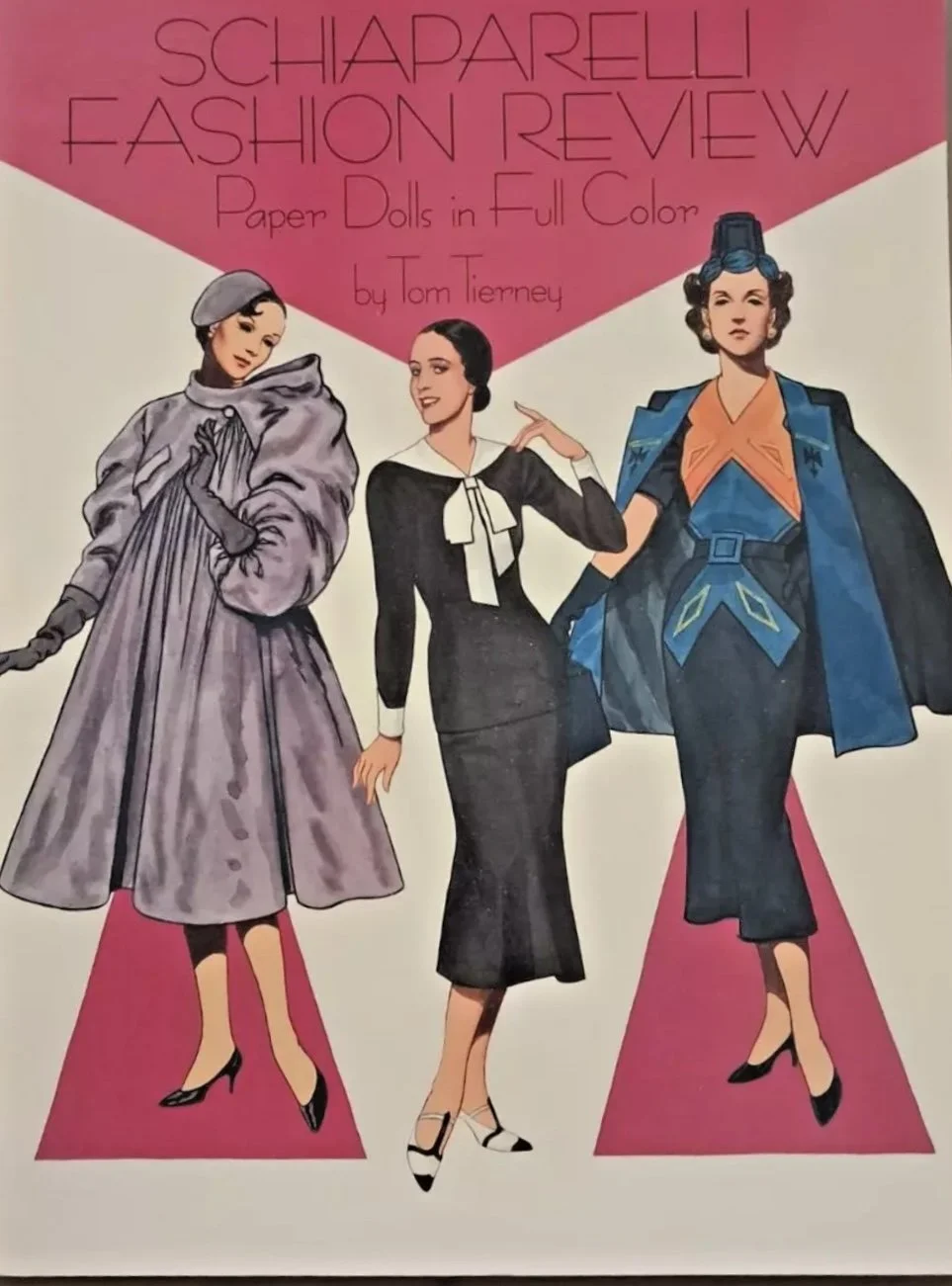
Schiaparelli 1930s / Reimagined 2026
Inspired by Schiaparelli’s surrealist heritage, this piece transforms couture into a sculptural expression of power, tension, and modern elegance.
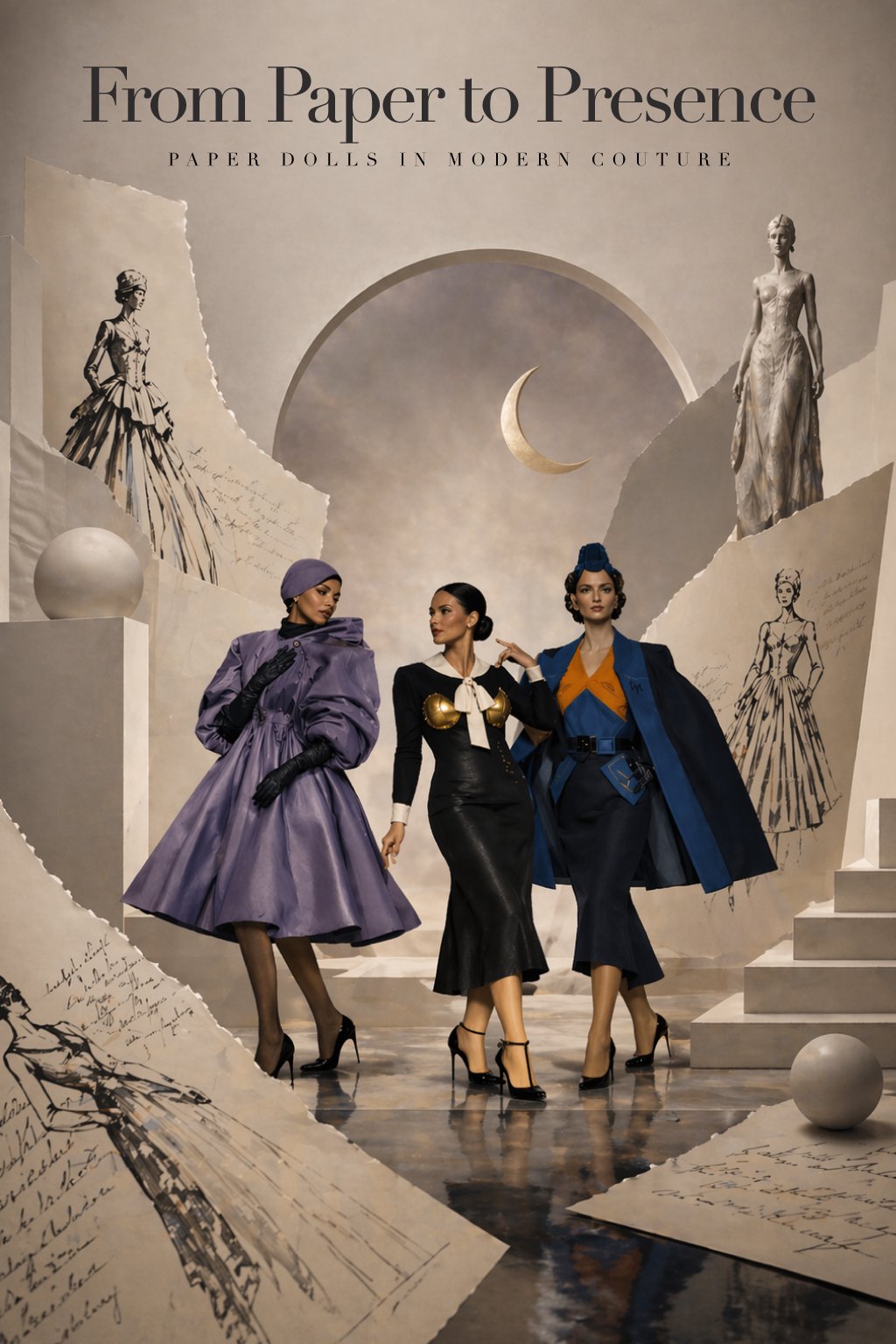
Schiaparelli Reimagined 2026
A contemporary reinterpretation of Schiaparelli’s 1930s fashion review, translating graphic elegance into a surreal stage of couture, symbolism, and feminine authority.
STAGE SHOES 1930s–1950s theatrical - service advertising
Inspired by early theatrical advertising from I. Miller & Sons, this piece reframes footwear as a tool of preparation rather than decoration. “Before the Work Begins” captures the quiet moment before action, where the shoe becomes a symbol of readiness, discipline, and performance.
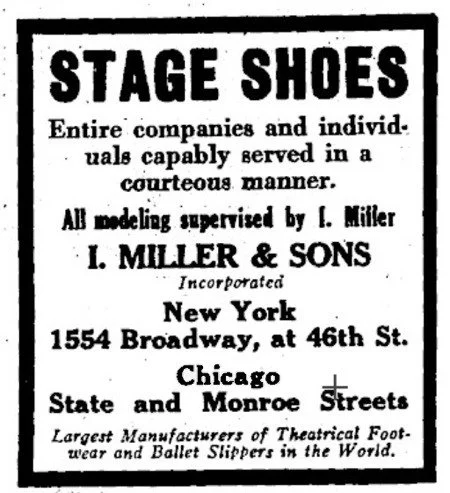
1930s–1950s theatrical - service advertising
Inspired by early theatrical advertising from I. Miller & Sons, this piece presents the shoe as a symbol of readiness the first step before performance begins.
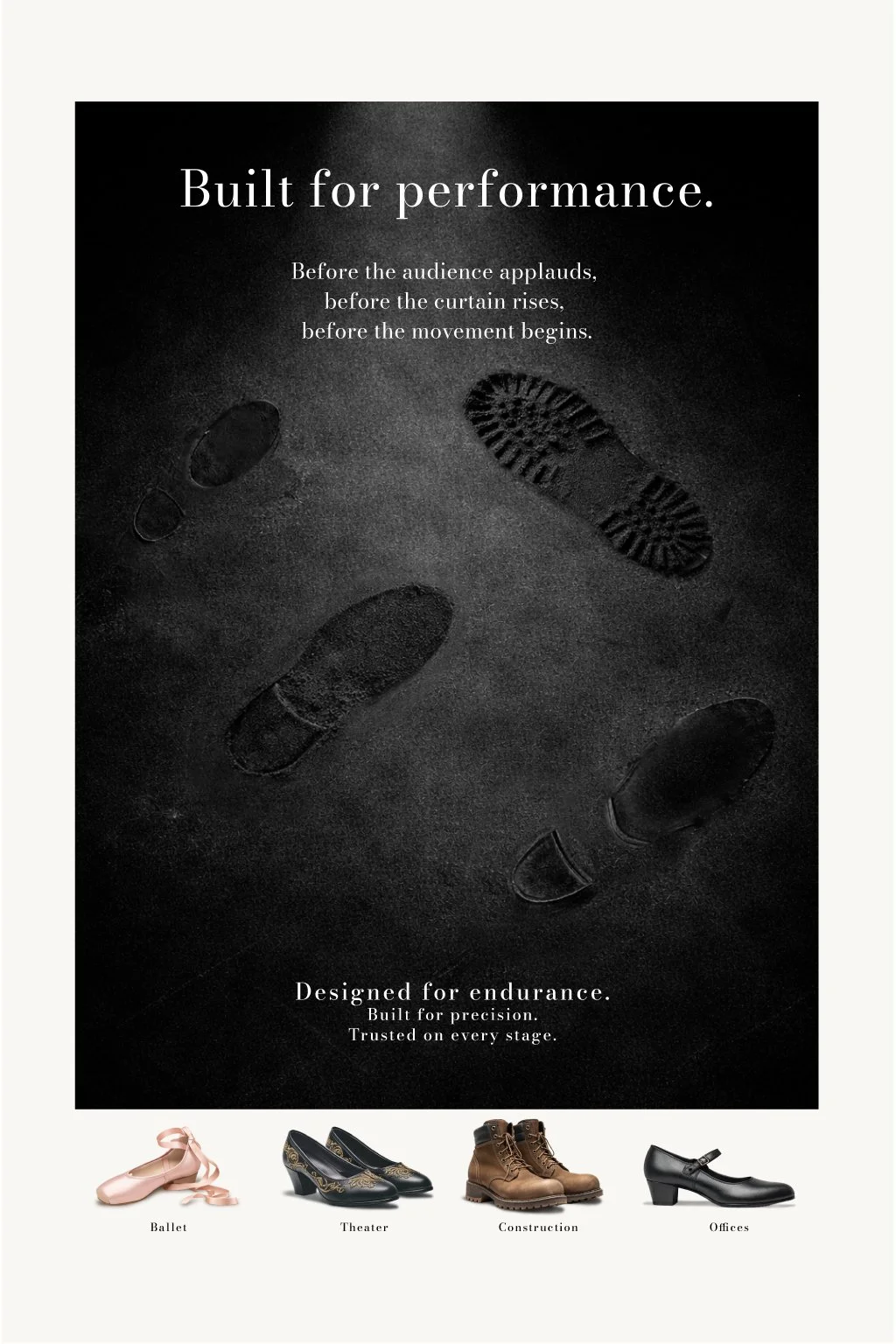
STAGE SHOES 1930–2026 Reinterpretation
A spotlight reveals footprints from different professions, shifting focus from the shoe to the evidence of performance.
ESQUIRE SOCKS 1956 CONTEXT
This 1956 Esquire Socks advertisement reflects the restraint and sophistication of mid-century American advertising. Through clean composition, controlled color, and refined typography, a basic accessory is elevated into a symbol of masculine polish and modern taste. More than selling socks, the ad sells refinement through detail.
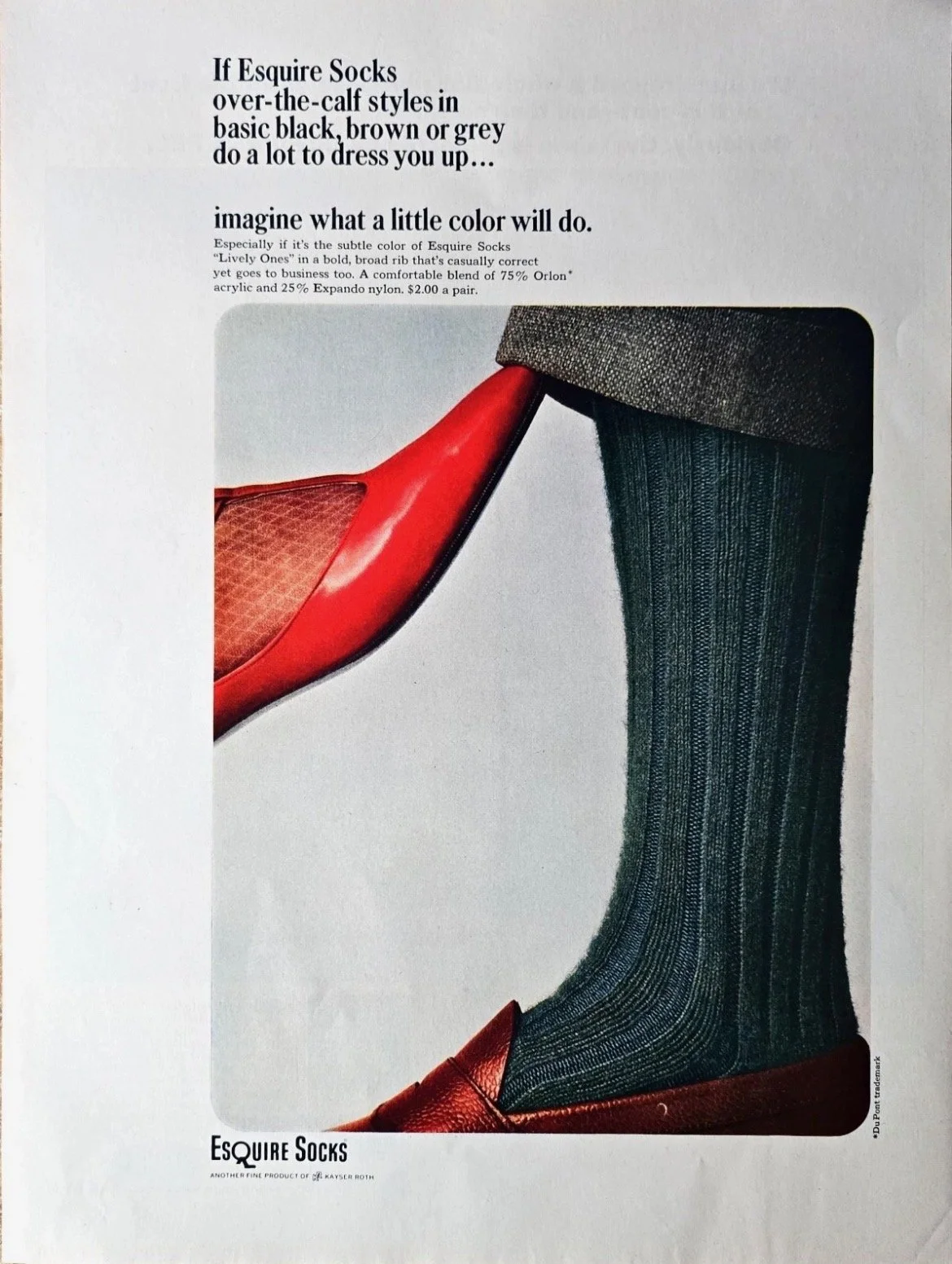
ESQUIRE SOCKS 1956 CONTEXT
This 1956 Esquire Socks advertisement reflects the restraint and elegance of mid-century American advertising, elevating a simple accessory into a symbol of refinement. More than selling socks, it sells sophistication through detail.
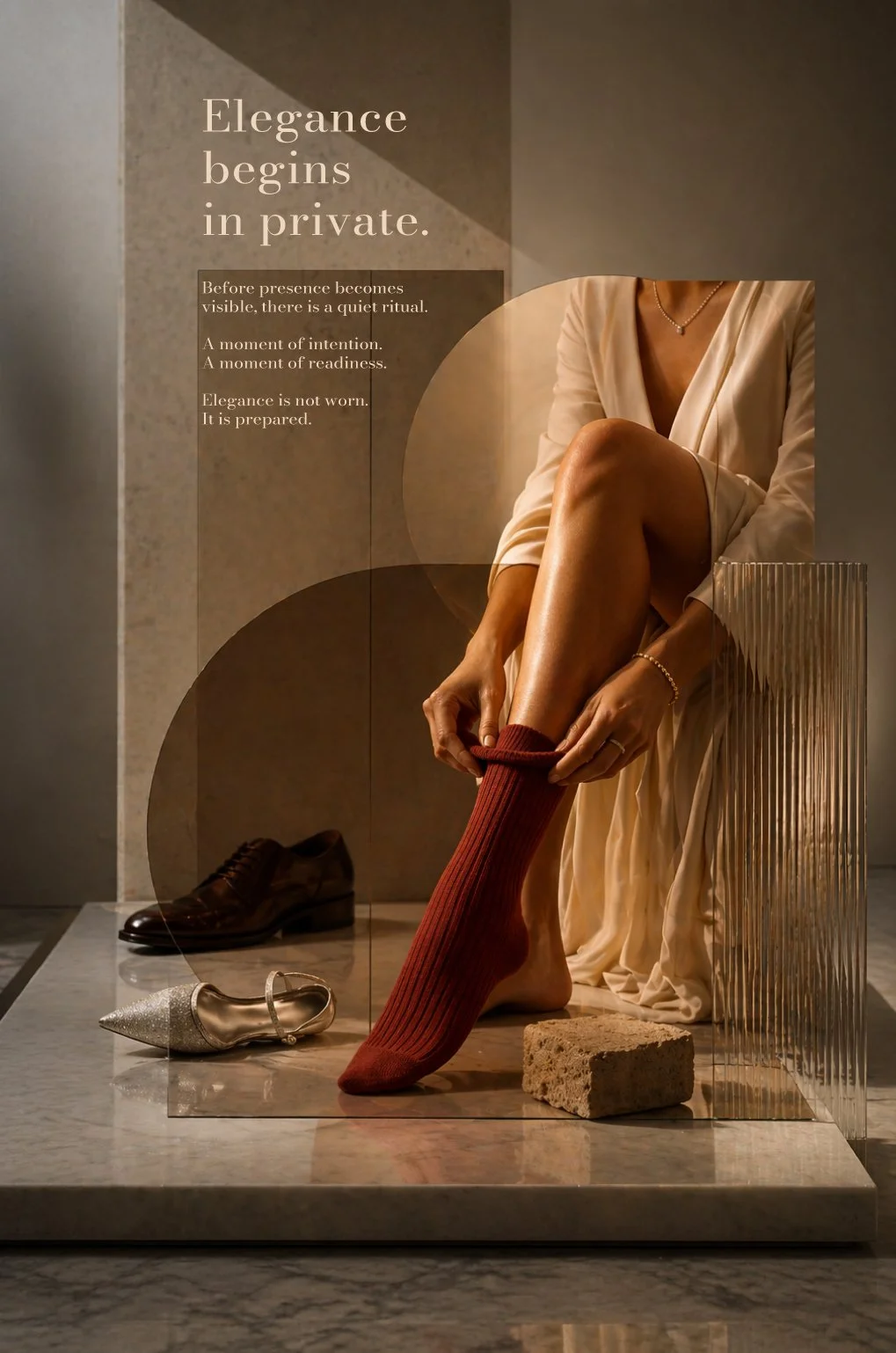
1956–2026 Reinterpretation
The scene is treated as a museum installation, where gesture becomes the central artifact. Minimal architecture, controlled light, and layered materials create a calm, contemplative space that gives the ritual conceptual meaning.